
Quick Answer
Retainers help keep teeth in their corrected positions after braces or clear aligners are removed. Although orthodontic appliances gradually move teeth into alignment, the surrounding bone, gums, and supporting tissues need time to adapt to these changes. Without proper retention, teeth can gradually shift back towards their previous positions, a process known as orthodontic relapse. Wearing retainers as recommended by an orthodontist helps maintain alignment, protect the results of treatment, and support a stable, healthy smile.
Key Takeaways
- Retainers prevent teeth from gradually shifting after braces or clear aligner treatment.
- The surrounding bone and supporting tissues need time to adjust after teeth have been moved.
- Removable and fixed retainers are two common options for maintaining alignment.
- Consistent wear and proper cleaning help retainers remain effective.
- Long-term retention may be necessary because natural tooth movement can continue throughout life.
Completing braces or clear aligner treatment is an exciting milestone. After months or even years of wearing orthodontic appliances, patients finally get to enjoy a straighter smile. However, achieving the desired alignment is only one part of maintaining the results. Teeth can continue to move even after active treatment has ended, which makes retention an essential part of the process.
This is where orthodontic retainers become important. These custom-made appliances help hold teeth in their corrected positions while the surrounding tissues adapt to their new alignment. Without consistent retainer use, teeth may gradually move out of position, potentially affecting the appearance and function of the smile. Understanding why retainers are necessary and how to use them correctly can help patients protect the results they have worked hard to achieve.
Why Do Teeth Shift After Orthodontic Treatment?
Teeth are not permanently fixed in the jawbone. They are supported by periodontal ligaments, surrounding bone, and other tissues that allow small movements over time.
During active treatment, braces and clear aligners apply controlled pressure to move teeth into better positions. As teeth move, the surrounding bone gradually remodels to accommodate their new locations.
However, these supporting structures need time to stabilize after the appliances are removed. The fibers around the teeth may continue to exert forces that encourage them to move towards their previous positions.
Several factors can contribute to post-treatment tooth movement:
1. Natural Tissue Reorganization
The periodontal ligaments and surrounding tissues need time to adapt after teeth have been repositioned. Until they stabilize, there may be a greater likelihood of unwanted movement.
2. Natural Age-Related Changes
Teeth can shift gradually throughout adulthood, even in people who have never worn braces. Changes in the jaw, facial structures, and surrounding tissues may influence tooth alignment over time.
3. Pressure From Everyday Habits
Certain habits, including tongue thrusting, nail biting, and teeth grinding, can place repeated pressure on teeth. Depending on their frequency and intensity, these forces may contribute to unwanted movement.
4. Not Wearing Retainers Consistently
One of the most common reasons for orthodontic relapse is failing to follow the recommended retainer schedule. Skipping wear for extended periods can allow teeth to move, potentially making the retainer uncomfortable or difficult to fit.
How Do Retainers Help Maintain Straight Teeth?
Retainers are designed to hold teeth in their corrected positions after active tooth movement has finished. Unlike braces or aligners, which apply pressure to reposition teeth, retainers provide support to maintain the achieved alignment.
Their primary benefits include:
- Preventing orthodontic relapse: Retainers help reduce the likelihood of teeth returning towards their previous positions.
- Maintaining bite alignment: They help preserve the relationship between the upper and lower teeth established during treatment.
- Protecting treatment results: Consistent use helps maintain the improvements achieved through months or years of orthodontic treatment.
- Supporting long-term stability: Retainers help manage natural tooth movement that may occur as a person gets older.
The recommended wearing schedule depends on the patient’s individual needs and the type of appliance used. Some patients may initially need to wear removable retainers throughout most of the day before transitioning to nighttime use. Others may receive fixed retainers for continuous support.
What Are the Different Types of Orthodontic Retainers?
Retainers come in different designs, and the most suitable option depends on tooth alignment, treatment history, oral health, and personal preferences.
1. Hawley Retainers
Hawley retainers are removable appliances made with an acrylic base and a thin metal wire that sits across the front teeth.
Benefits include:
- Durable construction that can last for several years with proper care.
- Adjustable design that allows minor orthodontic modifications when appropriate.
- Easy removal for eating and cleaning.
- Available in different colors and designs.
Some patients may find the acrylic base and metal wire less comfortable initially, but most adjust to wearing them over time.
2. Clear Plastic Retainers
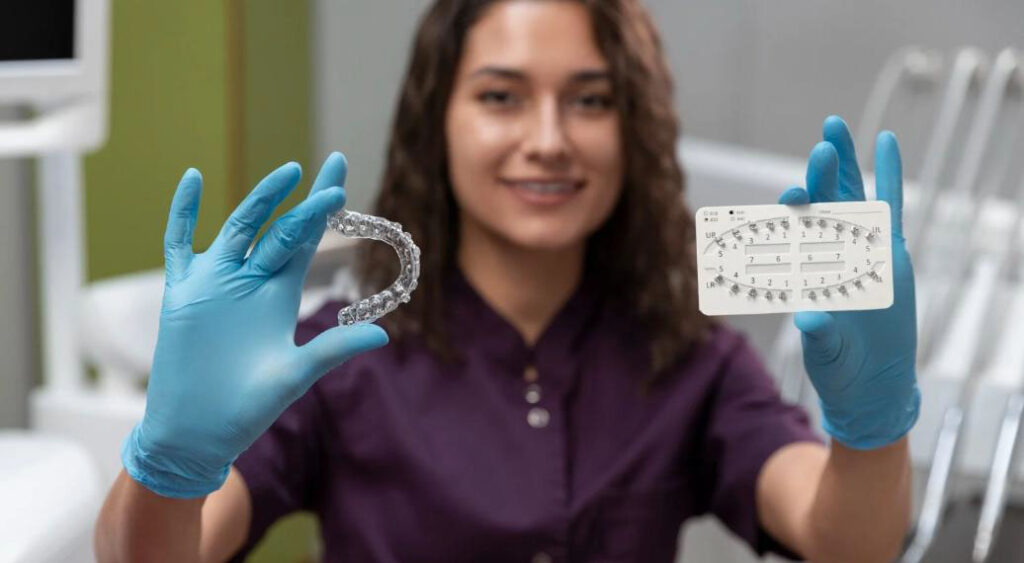
Clear retainers are custom-made plastic appliances that fit closely over the teeth. Their transparent appearance makes them a popular choice among patients who prefer a less noticeable option.
Benefits include:
- Nearly invisible appearance when worn.
- Custom fit based on the patient’s dental alignment.
- Smooth design that many patients find comfortable.
- Easy removal during meals and oral hygiene routines.
However, clear plastic retainers can wear out, crack, or become damaged over time. They may need replacement depending on their condition and the orthodontist’s recommendations.
3. Fixed Retainers
Fixed retainers consist of a thin wire bonded to the back surfaces of selected teeth, usually the front teeth. Unlike removable options, they remain in place continuously.
Benefits include:
- Continuous support without needing to remember daily insertion.
- Less visible placement behind the teeth.
- Useful for patients who may struggle with removable retainer schedules.
- No need to remove the appliance while eating.
Fixed retainers require careful cleaning because plaque and food particles can accumulate around the wire and bonding points. Regular dental examinations help ensure that the appliance remains secure and functional.
How Long Should You Wear a Retainer?
The length of time a patient needs to wear a retainer depends on their orthodontic history and the likelihood of tooth movement.
In many cases, patients initially wear removable retainers for most of the day, removing them only for meals and cleaning. Once the orthodontist determines that the teeth have stabilized sufficiently, the schedule may transition to nighttime wear.
However, retention is generally a long-term commitment. Teeth can continue to shift throughout adulthood, which means nighttime retainer use may be recommended indefinitely.
Patients with fixed retainers should also attend regular checkups to ensure the wire remains attached and has not become damaged.
The most important thing is to follow the individual wearing schedule rather than assuming that retainers are no longer necessary once the teeth appear stable.
What Happens If You Stop Wearing Your Retainer?
Stopping retainer use can allow teeth to move away from their corrected positions. The extent of this movement varies depending on the individual, the time since treatment, and their natural tendency towards tooth movement.
Some patients may notice small changes in tooth spacing or alignment, while others may experience more noticeable shifting.
Possible consequences include:
- Crowding or overlapping of previously straight teeth.
- New gaps between teeth.
- Changes in how the upper and lower teeth fit together.
- Difficulty wearing an old retainer because the teeth have shifted.
- A possible need for additional orthodontic treatment.
If your retainer no longer fits properly, do not force it over your teeth. Contact your orthodontist for an evaluation. Trying to force an ill-fitting appliance may cause discomfort or unwanted pressure.
How Should You Care for Your Retainer?
Proper maintenance helps keep retainers clean, comfortable, and effective. Poor cleaning habits can allow plaque and bacteria to accumulate, potentially affecting oral hygiene.
Follow these practical recommendations:
Clean Your Retainer Regularly
Rinse removable retainers with lukewarm water after taking them out. Clean them using a soft toothbrush and a cleaning method recommended by your orthodontist.
Avoid hot or boiling water because excessive heat can distort plastic retainers.
Store Removable Retainers Safely
Keep your retainer in its protective case whenever you are not wearing it. Avoid wrapping it in tissues or leaving it on exposed surfaces, where it can easily be misplaced or damaged.
Maintain Good Oral Hygiene
Brush twice daily and clean between your teeth regularly. If you wear a fixed retainer, pay particular attention to the areas around the wire and bonding material.
Avoid Damaging Habits
Do not chew on removable retainers or expose them to unnecessary heat. Keep them away from pets, as animals may chew and damage the appliance.
Attend Regular Dental Visits
Routine examinations allow your dental professional to check the condition of your retainer, identify potential damage, and monitor changes in tooth alignment.
How Does Orthodontic Care Support Long-Term Results?
The end of active treatment does not mean that professional monitoring is no longer necessary. Regular follow-up appointments help orthodontists assess whether the teeth remain stable and whether the retainer continues to fit correctly.
Good orthodontic care also involves addressing habits and oral health concerns that could affect alignment. For example, untreated gum disease, persistent teeth grinding, and certain oral habits may influence the long-term stability of the teeth.
If a retainer becomes loose, cracked, or uncomfortable, professional evaluation can help determine whether it needs adjustment or replacement. Patients should also report noticeable changes in their bite or tooth positions rather than waiting for the problem to become more pronounced.
Maintaining communication with your orthodontist helps ensure that retention remains an effective part of your long-term oral health routine.
Frequently Asked Questions
1. Are retainers really necessary after braces?
Yes. Teeth can gradually move after braces are removed because the surrounding tissues need time to adapt. Retainers help maintain the corrected positions and reduce the risk of orthodontic relapse.
2. Can teeth shift even if I wear my retainer?
Yes. Retainers significantly reduce unwanted movement, but they cannot completely prevent all natural changes. Wearing them according to professional instructions and attending regular checkups helps maintain better stability.
3. Can I wear my retainer only when my teeth feel different?
No. Waiting until you notice movement may mean that some shifting has already occurred. Follow the prescribed schedule rather than relying on how your teeth feel.
4. How do I know if my retainer needs replacement?
Visible cracks, warping, loose fitting, broken wires, or damaged bonding points may indicate that a retainer needs repair or replacement. Contact your orthodontist if you notice any of these issues.
5. Are fixed retainers better than removable retainers?
Neither option is universally better. Fixed retainers provide continuous support, while removable retainers are easier to clean and can be removed during meals. Your orthodontist can recommend the most suitable option based on your dental needs.
Retainers play an essential role in protecting the results achieved through braces or clear aligner treatment. Although active treatment moves teeth into their desired positions, long-term retention helps maintain that alignment as the surrounding tissues adapt and natural changes occur. Choosing the right appliance, following the recommended wearing schedule, and maintaining good oral hygiene can help preserve a straight and healthy smile for years.
If you have recently completed orthodontic treatment or need guidance about maintaining your results, professional advice can help you make informed decisions. At Hebron Smiles, patients looking for an orthodontist in Carrollton can receive personalized guidance on orthodontic retention, retainer options, and maintaining their smile after treatment. Schedule an appointment to discuss your retention needs and keep your orthodontic results on track.