
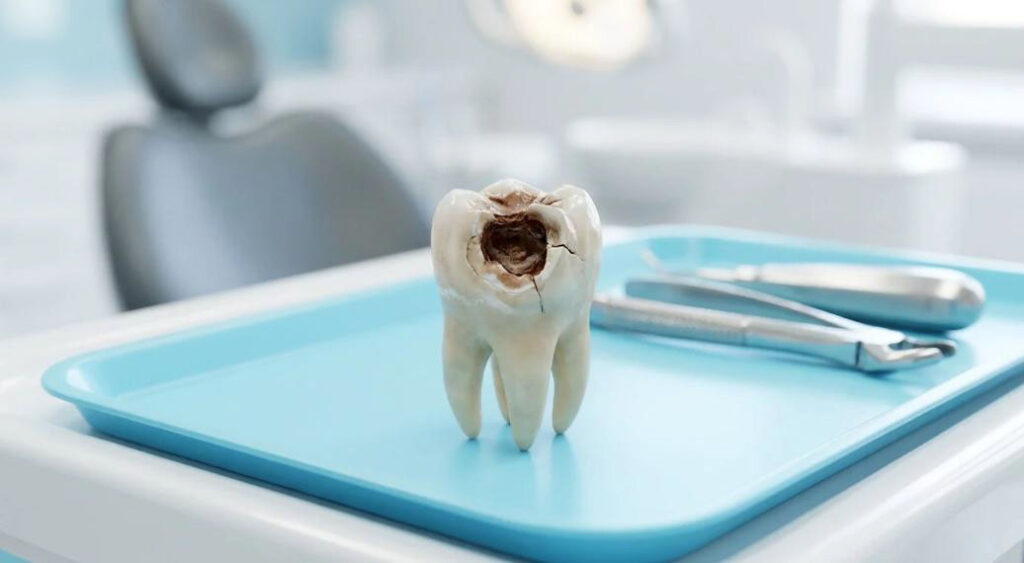
Quick Answer
Severe tooth decay may require extraction when the damage is too extensive to restore with a filling, crown, or root canal treatment. Small and moderate cavities can often be repaired by removing the decayed portion and filling the space. However, when decay destroys most of the tooth structure, causes an infection that cannot be treated successfully, or extends below the gumline, removing the tooth may be the safest option. A dental examination and X-rays help determine which treatment is appropriate.
Key Takeaways
- Fillings are generally suitable for cavities that have not caused extensive structural damage.
- Deep decay does not automatically mean a tooth needs extraction. Root canal treatment may still preserve it.
- Severe fractures, extensive structural damage, and certain infections can make extraction necessary.
- Early diagnosis gives dentists more opportunities to save natural teeth.
A small cavity may not seem like a serious concern, especially when it causes little or no discomfort. However, tooth decay can gradually spread through the enamel and dentin, eventually reaching the pulp, which contains the tooth’s nerves and blood vessels. At this stage, the treatment required may be more involved than a routine filling. Understanding when tooth decay extraction becomes necessary can help patients recognize why early dental care matters and what options may be available before permanent tooth loss occurs.
The decision between repairing and removing a tooth depends on how much healthy structure remains, whether the inner tissues are affected, and whether the tooth can function properly after treatment. A dentist will evaluate these factors before recommending a procedure.
How Does Tooth Decay Progress?
Tooth decay develops when bacteria in dental plaque produce acids that gradually weaken the tooth’s protective enamel. Frequent consumption of sugary foods and drinks, inadequate brushing, and inconsistent dental checkups can contribute to this process.
Decay generally progresses through several stages:
1. Enamel Damage
The earliest stage affects the outer enamel. White spots or slight discoloration may appear, but there may be no noticeable pain. Early mineral loss can sometimes be managed with fluoride treatments and improved oral hygiene. If a cavity has already formed, a filling may be required.
2. Decay Reaches the Dentin
Once bacteria pass through the enamel, they reach the softer dentin underneath. This layer is more vulnerable to decay, allowing damage to progress more quickly. Patients may experience sensitivity when eating sweet foods or consuming hot and cold beverages. A dentist may recommend removing the decayed tissue and placing a filling, depending on the extent of the damage.
3. Infection Reaches the Dental Pulp
When decay advances toward the center of the tooth, bacteria can affect the pulp. This may cause persistent toothaches, prolonged temperature sensitivity, and discomfort while chewing. Root canal treatment may be necessary to remove infected tissue and preserve the remaining tooth structure.
4. Extensive Structural Damage
In advanced cases, decay may destroy a significant portion of the tooth, leaving insufficient healthy structure to support a restoration. Infection can also spread beyond the tooth’s root. When the damage cannot be predictably repaired, extraction may become necessary.
When Is a Filling Enough to Treat Tooth Decay?
A filling is usually recommended when the cavity is relatively small or moderate and enough healthy tooth structure remains to support the restoration.
During treatment, the dentist removes the decayed portion, cleans the affected area, and fills the space with a suitable restorative material. Tooth-colored composite fillings are commonly used because they blend with the natural appearance of the tooth.
A filling may be appropriate when:
- Decay is limited to the enamel or dentin.
- The tooth has sufficient healthy structure to support a filling.
- The dental pulp has not developed an irreversible infection.
- The damage has not significantly affected the tooth’s ability to withstand chewing pressure.
For deeper cavities, a standard filling may not provide enough protection. Depending on the diagnosis, the dentist may recommend additional restorative treatment or root canal therapy instead.
When Does Severe Tooth Decay Require Extraction?
Not every deeply decayed tooth needs to be removed. Dentists generally consider extraction when preserving the tooth is no longer predictable or practical.
Here are some situations in which removal may be recommended.
1. Too Much of the Tooth Structure Has Been Lost
A filling needs a stable foundation to remain secure. When decay has destroyed most of the tooth’s crown, there may not be enough healthy enamel and dentin to hold a restoration in place.
Even a dental crown may not solve the problem if the remaining structure cannot adequately support it. In such cases, a dentist may determine that extraction offers a more reliable way to address the damaged tooth.
2. The Tooth Has a Severe Infection
Untreated decay can allow bacteria to reach the pulp and cause an infection. Root canal treatment can often eliminate infected tissue while preserving the natural tooth. However, if the infection is extensive and the tooth cannot be restored successfully, removal may be necessary.
An abscess may develop around the root, leading to swelling, tenderness, pus formation, or persistent pain. Such infections require prompt professional attention rather than attempts to manage the symptoms at home.
3. The Tooth Is Broken Beyond Repair
Extensive decay can weaken the tooth until ordinary chewing pressure causes it to crack or break. A broken tooth may sometimes be restored with bonding or a crown, depending on the location and severity of the damage.
However, if the fracture extends below the gumline or into the root, the chances of successful restoration may be limited. When the tooth cannot be stabilized or restored, extraction may be recommended to prevent further complications.
4. Previous Treatments Have Not Successfully Saved the Tooth
Sometimes, a tooth that has undergone earlier restorative or root canal treatment develops recurring problems. Persistent infection, additional fractures, or further loss of supporting structure can affect its long-term prognosis.
If retreatment or another restoration is unlikely to provide a predictable result, the dentist may discuss extraction and possible replacement options.
Can a Root Canal Save a Severely Decayed Tooth?
Yes. A severely decayed tooth can sometimes be saved through root canal treatment, even when the infection has reached the dental pulp.
During this procedure, the dentist removes the infected or inflamed pulp, cleans and disinfects the internal canals, and seals the space to reduce the risk of reinfection. A crown may then be recommended to protect the remaining tooth structure, particularly when significant damage has occurred.
However, root canal treatment cannot rebuild a tooth that has lost too much of its structural integrity. If the remaining tooth is too weak or has an unfavorable fracture, extraction may still be the better option.
The goal is not simply to eliminate pain but to preserve a functional natural tooth whenever a predictable outcome is possible.
What Happens During a Decayed Tooth Extraction?
When a tooth cannot be restored, a dentist may recommend a decayed tooth extraction after evaluating the affected area and discussing the available treatment options.
The procedure generally involves the following steps:
- Initial examination: The dentist checks the affected tooth, surrounding tissues, and dental X-rays to understand the extent of the damage.
- Local anesthesia: The area is numbed to minimize discomfort during the procedure. Sedation may also be discussed for patients who feel anxious.
- Tooth removal: Depending on the condition and position of the tooth, the dentist performs a simple or surgical extraction.
- Post-procedure care: The extraction site is cleaned, and instructions are provided to support proper healing.
Most simple extractions take approximately 20–40 minutes, although surgical procedures may require more time depending on their complexity.
After removal, patients should follow their dentist’s instructions, avoid smoking and drinking through straws, and choose soft foods during the initial recovery period.
What Happens If You Delay Treatment?
Ignoring severe tooth decay can allow the problem to progress and create additional oral health complications.
Possible consequences include:
- Increasing pain: Damage to the inner tooth tissues can cause persistent or worsening discomfort.
- Dental abscesses: Bacterial infections can lead to pus formation, swelling, and tenderness around the affected tooth.
- Damage to surrounding structures: An untreated infection may spread into nearby tissues and, in serious cases, other parts of the body.
- Difficulty chewing: Extensive damage can interfere with normal biting and eating.
- More complicated treatment: Delaying care may reduce the available options for preserving the natural tooth.
Facial swelling, fever, or difficulty swallowing or breathing alongside a suspected dental infection requires urgent medical attention. Difficulty breathing or swallowing warrants emergency care.
How Can You Reduce the Risk of Tooth Extraction?
Although not every extraction can be prevented, consistent dental care can help reduce the likelihood of severe decay.
Consider these preventive habits:
- Brush twice daily with fluoride toothpaste.
- Clean between your teeth every day using floss or another suitable interdental cleaner.
- Limit frequent consumption of sugary snacks and beverages.
- Attend regular dental examinations so cavities can be identified early.
- Seek professional attention when you notice sensitivity, persistent pain, or visible damage.
- Follow your dentist’s recommendations for fillings and other restorative treatments.
Addressing a cavity early is generally simpler than treating extensive decay after it has affected multiple layers of the tooth.
Frequently Asked Questions
1. Does severe tooth decay always require extraction?
No. Even when decay reaches the dental pulp, root canal treatment may save the natural tooth. Extraction is generally considered when the damage is too extensive to restore or the tooth has a poor long-term prognosis.
2. Can a dentist fill a tooth with deep decay?
Yes, depending on the extent of the damage. If the decay has not caused irreversible pulp damage and enough healthy structure remains, a filling may be possible. Deeper cavities may require additional treatment.
3. How do I know if my tooth is too damaged to save?
Persistent pain, swelling, extensive visible damage, and a fractured tooth may indicate a serious problem. However, symptoms alone cannot determine whether extraction is necessary. A clinical examination and X-rays are needed.
4. Is tooth extraction painful?
The area is numbed with local anesthesia before the procedure. Patients may experience pressure during removal but should not feel sharp pain. Some soreness and swelling afterward are normal.
5. Should I replace a tooth after extraction?
Replacing a missing permanent tooth is often recommended to help maintain chewing function, prevent neighboring teeth from shifting, and support the bite. Options may include dental implants, bridges, or dentures, depending on individual needs.
Severe tooth decay does not always mean a tooth must be removed. In many cases, timely fillings or root canal treatment can preserve the natural tooth and restore its function. However, when extensive damage, an unmanageable infection, or a severe fracture makes restoration unreliable, extraction may be the most appropriate option. Getting a professional evaluation early can help prevent avoidable complications and clarify the best course of treatment.
If you are experiencing persistent tooth pain or suspect advanced decay, schedule an examination with a dentist. For patients considering dental extraction in Carrollton, TX, Hebron Smiles provides tooth extraction services, emergency appointments, and sedation options to support patient comfort. Contact the team to discuss your symptoms and determine the treatment your oral health requires.