
Quick Answer
A child’s first dental visit is mainly about building familiarity, checking oral health, and helping parents understand how to care for developing teeth. Pediatric dental treatment can include an examination, discussion about oral hygiene and diet, assessment of tooth development, and preventive guidance. Preparing your child with simple, positive explanations can make the experience more comfortable.
Key Takeaways
- A child’s first dental visit focuses on prevention, examination, and building trust.
- Parents can prepare children by explaining the visit positively without creating unnecessary fear.
- Regular brushing, healthy eating habits, and professional dental visits support healthy development.
- Early dental care helps identify potential concerns before they become more complicated.
Starting pediatric dental treatment early gives children an opportunity to become comfortable with dental visits while their teeth and jaws are still developing. A first appointment is not necessarily about treating a dental problem. Instead, it gives the dentist an opportunity to examine the child’s mouth, discuss oral hygiene habits, answer parents’ questions, and establish a foundation for ongoing preventive care. Knowing what will happen can also help parents prepare their child for a positive first experience.
When Should a Child Have Their First Dental Visit?
The first dental visit should happen early in childhood, ideally around the time the first tooth appears or by the child’s first birthday. Early appointments allow dental professionals to monitor the development of primary teeth and identify potential concerns.
Waiting until a child experiences tooth pain is not ideal because some dental problems can develop without obvious symptoms. Regular visits allow concerns to be identified earlier and give parents guidance on maintaining healthy habits at home.
The appropriate schedule after the first appointment depends on the child’s oral health, risk factors, and recommendations from the dental provider.
What Happens During the First Dental Visit?
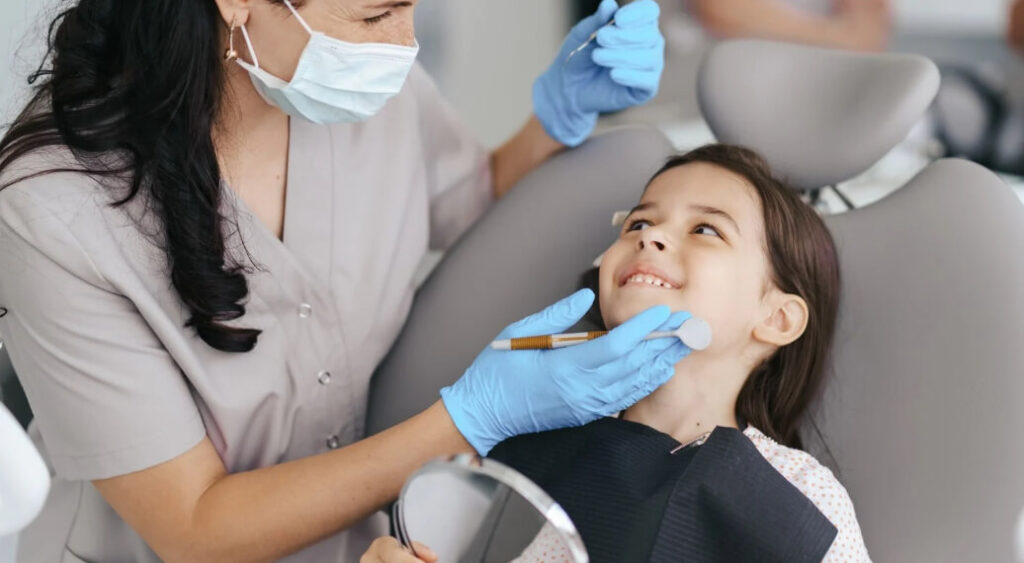
A child’s first appointment is usually designed to be simple and age-appropriate. The dentist may begin by talking with the parent and child before examining the mouth.
Health and Dental History
Parents may be asked about the child’s general health, previous dental experiences, eating habits, brushing routine, thumb-sucking or pacifier use, and any concerns they have noticed.
This information helps the dental team understand factors that could influence oral health and development.
Examination of the Teeth and Gums
The dentist examines the child’s teeth, gums, tongue, jaw, and surrounding oral structures. They look for early signs of tooth decay, gum concerns, developmental issues, or changes that may require monitoring.
For very young children, the examination may be brief. The dentist may allow the child to sit on a parent’s lap or use a comfortable position that helps them feel secure.
How Can Parents Prepare Their Child?
Preparation does not need to involve complicated explanations. Young children often respond best to simple, reassuring language.
Parents can explain that the dentist will count and look at their teeth. Reading children’s books about dental visits or playing pretend dentist at home can also make the experience feel familiar.
Avoid Creating Fear Before the Appointment
Words such as “pain,” “shot,” or “hurt” can create anxiety even when parents are trying to reassure their child. Instead, focus on what the child can expect in a positive and age-appropriate way.
It is also helpful to avoid promising that nothing uncomfortable will ever happen. If treatment is eventually needed, the dental team can explain procedures using language that suits the child’s age and understanding.
What Does Pediatric Dental Care Involve?
Ongoing pediatric dental care focuses on preventing dental problems while supporting healthy oral development. Regular appointments give the dental team opportunities to monitor changes as children grow.
Parents can receive guidance on brushing techniques, fluoride use, nutrition, habits that may affect tooth development, and ways to reduce the risk of cavities.
Children also gradually learn that dental visits are a normal part of taking care of their health. Familiarity can make future appointments easier and help establish positive attitudes toward oral hygiene.
What About Dental Cleaning for Children?
A professional dental cleaning may be recommended depending on the child’s age, oral health, and individual needs. During a cleaning, dental professionals can remove plaque or buildup that may be difficult to eliminate through regular brushing alone.
The experience is adapted to the child’s age and comfort level. The dental team may explain each step before performing it, helping the child understand what is happening.
Professional cleaning does not replace daily brushing. Instead, it complements good home care and provides another opportunity for the dental team to check the condition of the teeth and gums.
How Should Parents Care for Baby Teeth at Home?
Baby teeth play an important role in chewing, speaking, and maintaining space for permanent teeth. Although they eventually fall out, they still require proper care.
Parents should help young children brush their teeth regularly using an age-appropriate toothbrush and the amount of fluoride toothpaste recommended by their dental professional.
As children become more independent, parents should continue supervising brushing until the child has developed the coordination needed to clean effectively.
Why Does Diet Matter?
Frequent exposure to sugary foods and drinks can increase the risk of tooth decay. Parents can support healthier teeth by offering balanced meals and limiting sugary snacks and drinks between meals.
Water is generally a good everyday beverage. If parents have questions about their child’s diet and dental health, these can be discussed during regular dental visits.
What If a Child Is Nervous at the Dentist?
Some anxiety is completely normal, particularly when a child has never experienced a dental appointment before. The goal of the first visit is not to force a child through every possible procedure.
A patient and child-friendly approach can help build trust over time. Parents can support this by remaining calm and allowing the dental team to guide the interaction.
If a child becomes uncomfortable, the dentist may modify the pace of the appointment, use simpler explanations, or allow breaks when appropriate.
What Should Parents Bring to the First Appointment?
Parents should bring relevant medical and dental information, including a list of medications if applicable. It can also help to bring the child’s comfort item if the dental office allows it.
Scheduling the appointment at a time when the child is generally rested can be useful. Very young children may be less cooperative when they are tired or hungry.
Parents should also make a note of questions or concerns they want to discuss. Topics such as thumb sucking, pacifier use, tooth eruption, brushing habits, and fluoride can all be addressed during the visit.
Frequently Asked Questions
1. How long does a child’s first dental appointment take?
The length varies depending on the child’s age, cooperation, oral health, and what needs to be discussed. First visits are often kept relatively simple to help children become comfortable.
2. Will my child need X-rays during the first visit?
Not necessarily. X-rays are recommended based on the child’s age, dental development, symptoms, and individual needs rather than automatically being performed at every first visit.
3. What if my child refuses to open their mouth?
Children can sometimes feel nervous in an unfamiliar environment. The dental team can use age-appropriate communication and gradual introductions to build cooperation rather than rushing the examination.
4. How often should children visit the dentist?
The recommended schedule depends on the child’s individual oral health and risk factors. The dental provider can recommend an appropriate recall schedule after evaluating the child’s teeth and gums.
5. Should parents stay with their child during the appointment?
For young children, having a parent nearby can provide reassurance. The best approach may vary according to the child’s age, comfort level, and the dental office’s approach.
A child’s first dental visit is an opportunity to establish healthy habits, monitor developing teeth, and make dental care feel familiar rather than intimidating. Parents can help by preparing their child with simple explanations, maintaining consistent oral hygiene at home, and treating dental visits as a normal part of growing up. Families looking for a pediatric dentist in Carrollton can use the first visit to discuss their child’s dental development, preventive needs, and long-term oral health goals.