
Quick Answer
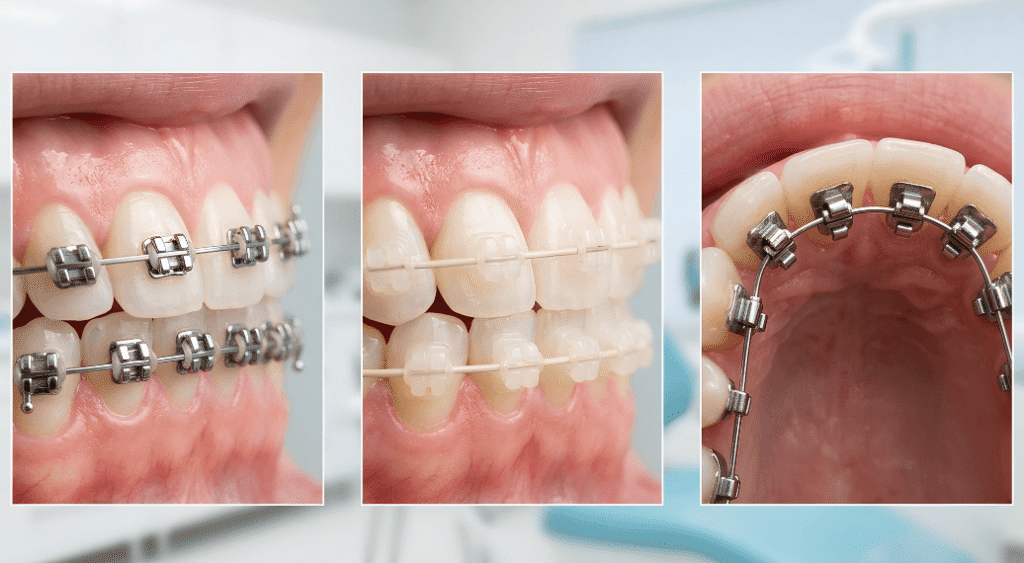
Choosing between different braces depends on your orthodontic needs, appearance preferences, lifestyle, and treatment goals. Modern orthodontic treatment options include traditional metal braces, tooth-colored ceramic braces, and lingual braces positioned behind the teeth. Each type works differently and offers its own balance of visibility, comfort, maintenance, and suitability for different orthodontic concerns.
Key Takeaways
- Metal, ceramic, and lingual braces can all move teeth gradually when properly planned and monitored.
- Appearance, treatment complexity, oral hygiene, and lifestyle can influence which appliance is appropriate.
- Ceramic braces offer a less noticeable appearance, while lingual braces are placed behind the teeth.
- An orthodontic evaluation is essential before choosing a specific type of braces.
When considering orthodontic treatment options, many patients focus first on how their braces will look. While appearance is certainly worth considering, the right choice also depends on tooth alignment, bite concerns, treatment goals, oral hygiene, and everyday habits. Metal, ceramic, and lingual braces can all provide effective tooth movement, but they differ significantly in design and day-to-day experience. Understanding these differences can help patients have a more informed conversation with their orthodontist before treatment begins.
Why Are There Different Types of Braces?
Orthodontic appliances work by applying controlled forces to gradually guide teeth into healthier positions. However, patients have different clinical needs and personal preferences. Some may prioritize durability, while others may prefer a less visible appliance.
Treatment planning also considers the complexity of tooth movement required. The position of the teeth, bite relationship, available space, and condition of the gums can all influence the appliance selected.
Rather than choosing braces based only on appearance, patients should consider how each option fits their specific treatment plan and daily routine.
Metal Braces: A Traditional and Versatile Choice
Traditional metal braces remain one of the most widely recognized orthodontic appliances. Small brackets are attached to the front surfaces of the teeth and connected with an orthodontic wire. Over time, carefully controlled pressure helps guide the teeth toward their planned positions.
One major advantage is their versatility. Metal braces can be used for many types of alignment and bite concerns, including crowding, spacing, and more complex orthodontic movements.
Their durable design can also make them a practical option for patients who need substantial tooth movement. However, the brackets and wires are more visible than some newer alternatives, which may be a consideration for teenagers and adults who prefer a discreet appearance.
What Is Daily Life Like With Metal Braces?
Food choices and oral hygiene require some additional attention during treatment. Certain hard or sticky foods may need to be avoided because they can damage brackets or wires.
Thorough brushing around the brackets is also essential. Interdental cleaning can help remove food debris from areas that are harder to reach with a standard toothbrush.
Ceramic Braces: A More Discreet Alternative
For patients who want the effectiveness of fixed braces but prefer a subtler appearance, ceramic appliances can be an option. Their brackets are typically made from tooth-colored or clear materials, allowing them to blend more naturally with the teeth.
The appearance of ceramic braces can make them appealing to older teenagers and adults who may feel self-conscious about wearing visible orthodontic appliances. They remain fixed to the teeth, so they provide continuous treatment without relying on the patient to remember to wear an appliance.
Are Ceramic Braces Right for Everyone?
Ceramic brackets can be suitable for many patients, but they are not automatically the best choice for every case. The type and complexity of tooth movement required should always guide appliance selection.
Careful cleaning is particularly important because plaque accumulation around brackets can affect the appearance and health of the teeth. Depending on the bracket material and dietary habits, some components may also become stained or discolored over time.
Lingual Braces: Orthodontic Treatment Behind the Teeth
Patients who place a high priority on discretion may consider an appliance that is positioned on the inside surfaces of the teeth. Lingual braces work from behind the teeth, making the appliance much less visible when someone smiles or speaks.
Unlike removable orthodontic appliances, lingual braces remain attached throughout treatment. Their placement allows orthodontic correction while keeping the brackets largely hidden from view.
However, the position of the appliance can create a different adjustment period. Some patients may initially notice changes in tongue comfort or speech. Cleaning can also require extra care because the brackets are located in an area that is less accessible.
How Should You Compare the Three Options?
There is no universal winner among metal, ceramic, and lingual braces. Each option has characteristics that may make it more suitable for particular patients.
Appearance
For patients who are comfortable with visible appliances, metal braces can provide a straightforward solution. Ceramic brackets offer a more subtle appearance, while lingual braces provide the highest level of concealment because they sit behind the teeth.
Treatment Needs
Clinical requirements should remain the first consideration. Some orthodontic cases require specific tooth movements or mechanics that may influence which appliance can deliver the desired result effectively.
Comfort and Adjustment
Every type of fixed appliance can require an adjustment period. Metal and ceramic brackets sit on the front of the teeth, while lingual appliances are positioned against the tongue side. The location of the appliance can therefore influence where patients notice pressure or irritation during the early stages.
Cleaning and Maintenance
Maintaining good oral hygiene is essential regardless of the appliance selected. Fixed braces create additional surfaces where plaque and food particles can collect, making consistent brushing and interdental cleaning particularly important.
What About Cost and Treatment Duration?
The overall cost and treatment duration depend on several factors, including the complexity of the case, the appliance selected, the length of treatment, and the individual treatment plan. A more discreet appliance may involve different laboratory or clinical considerations than traditional braces.
Treatment time should also not be judged solely by the type of braces. Two patients using the same appliance can have very different treatment timelines because their orthodontic problems and biological responses are not identical.
An orthodontist can provide a more meaningful estimate after examining the teeth, bite, and supporting structures.
How Does an Orthodontist Help You Choose?
A professional evaluation helps connect your personal preferences with your clinical requirements. During an orthodontic examination, the provider can assess crowding, spacing, tooth position, jaw relationships, and bite alignment before recommending an appliance.
Your lifestyle can also be discussed. Someone who plays contact sports, has difficulty maintaining oral hygiene, or strongly prefers a discreet appearance may have different priorities from another patient.
The goal is not simply to select the least visible or most familiar option. Instead, the appliance should support predictable tooth movement while fitting reasonably well into your everyday life.
Frequently Asked Questions
1. Which type of braces is the least noticeable?
Lingual braces are generally the least visible because they are positioned behind the teeth. Ceramic braces can also provide a more discreet appearance compared with traditional metal brackets.
2. Are ceramic braces as effective as metal braces?
Ceramic braces can effectively address many orthodontic concerns. However, suitability depends on the individual case and the type of tooth movement required.
3. Are lingual braces difficult to clean?
Cleaning lingual braces can take some practice because the brackets are positioned behind the teeth. Consistent brushing and appropriate interdental cleaning are important throughout treatment.
4. Can adults choose any type of braces?
Adults may have several orthodontic options, but the appropriate choice depends on their dental health, alignment concerns, bite, and treatment goals. An orthodontic assessment is needed before selecting an appliance.
5. How do I know which braces are right for me?
The best choice depends on both clinical requirements and personal priorities. Discussing your preferred appearance, lifestyle, treatment expectations, and oral hygiene routine with an orthodontist can help narrow down the appropriate options.
Metal, ceramic, and lingual braces each offer distinct advantages, and the right choice depends on more than how the appliance looks. Factors such as orthodontic needs, treatment complexity, visibility, comfort, maintenance, and personal preferences should all be considered before treatment begins. Patients exploring family orthodontics in Hebron can benefit from a professional evaluation that connects their individual goals with an appropriate orthodontic approach.